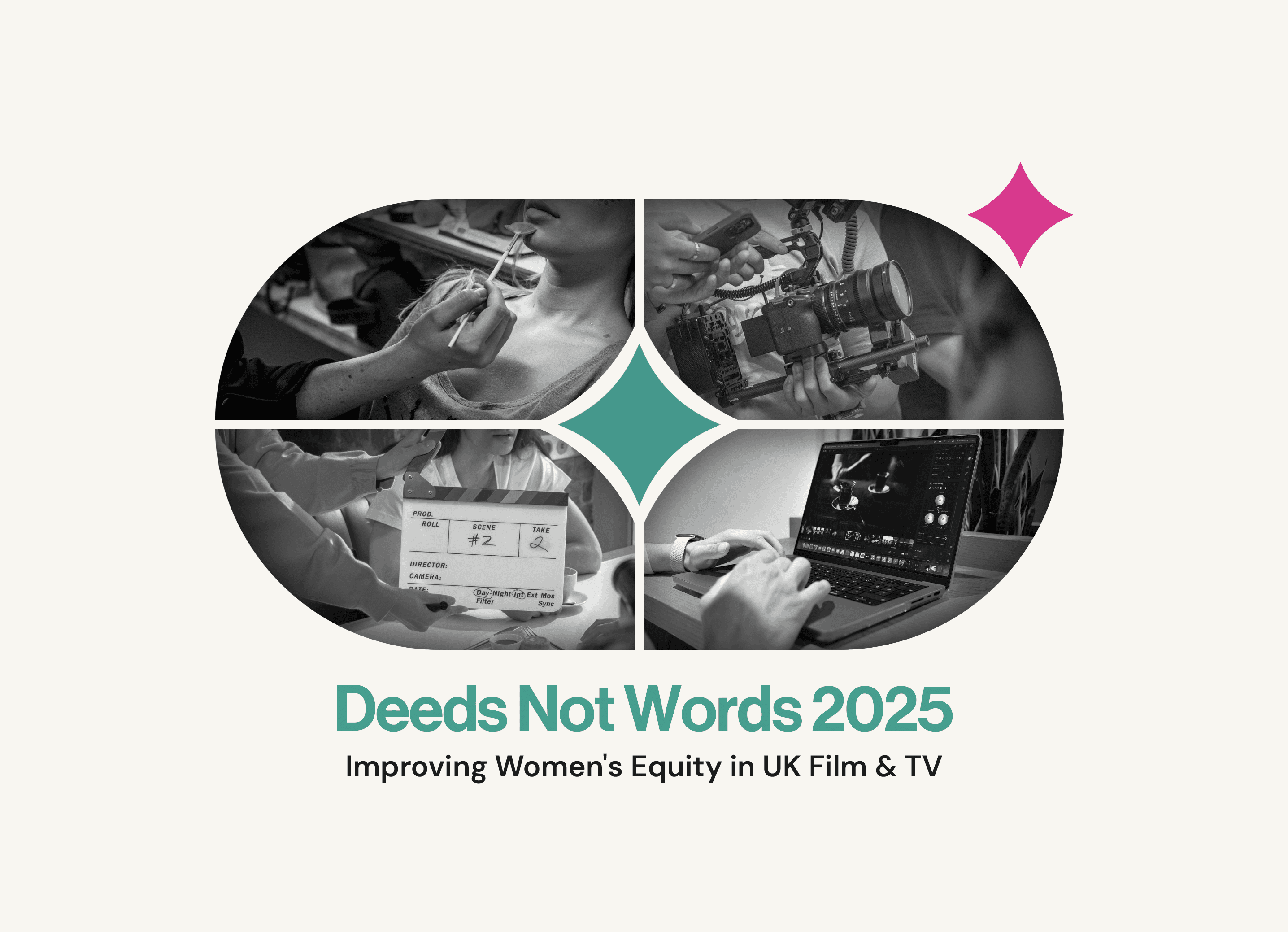
Deeds Not Words Policy Design Guide
Deeds Not Words Policy Design Guide
An evidence-based tool for effective interventions
An evidence-based tool for effective interventions
I'm proud to have been part of the team drafting and testing this Guide. It encourages practical, collaborative action.


Sara Putt
Talent agent and BAFTA Chair | 2023-2026
At Pact we’re always looking for evidence- based best practice to use ourselves and to recommend to our members. I’m glad to put my name to the Guide


Anjani Patel
Head of Inclusion & Diversity at Pact
We must do more to ensure genuine gender equity is achieved. The Guide - rooted in 6 simple questions – is a necessary tool for helping us assess approaches to programme design.


Sara Whybrew
Director of Skills & Workforce Development at the BFI
Right now, we are in danger of losing the gains women have made. The Guide is a brilliant practical framework that employers of big and small organisations can use to sense-check policies and initiatives.


Su-Mei Thompson
CEO of Media Trust
Women working in UK TV are still more likely to be in non-senior jobs and are heavily outnumbered by men in some influential roles. The Guide provides insights to help us turn this around and address the multiple barriers that hinder progression.


Miranda Wayland
CEO, Cultural Diversity Network
I'm proud to have been part of the team drafting and testing this Guide. It encourages practical, collaborative action.
Sara Putt
Talent agent and BAFTA Chair | 2023-2026
At Pact we’re always looking for evidence- based best practice to use ourselves and to recommend to our members. I’m glad to put my name to the Guide
Anjani Patel
Head of Inclusion & Diversity at Pact
We must do more to ensure genuine gender equity is achieved. The Guide - rooted in 6 simple questions – is a necessary tool for helping us assess approaches to programme design.
Sara Whybrew
Director of Skills & Workforce Development at the BFI
Right now, we are in danger of losing the gains women have made. The Guide is a brilliant practical framework that employers of big and small organisations can use to sense-check policies and initiatives.
Su-Mei Thompson
CEO of Media Trust
Women working in UK TV are still more likely to be in non-senior jobs and are heavily outnumbered by men in some influential roles. The Guide provides insights to help us turn this around and address the multiple barriers that hinder progression.
Miranda Wayland
CEO, Cultural Diversity Network
What is the Deeds Not Words Policy Design Guide?
What is the Deeds Not Words Policy Design Guide?
The Guide gives you six practical questions to ask yourself and colleagues when writing or reviewing policies, interventions and action plans to support women’s equity. The aim is to make them more effective, turning words into action.
The Guide gives you six practical questions to ask yourself and colleagues when writing or reviewing policies, interventions and action plans to support women’s equity. The aim is to make them more effective, turning words into action.
Why is it needed?
Why is it needed?
Research shows that despite great effort and some significant gains, progress towards gender equity is grindingly slow.
Research shows that despite great effort and some significant gains, progress towards gender equity is grindingly slow.
How was the Guide developed?
How was the Guide developed?
The Guide is based on evidence gathered over 3-years of academic research. It has been co-created and endorsed by experienced industry leaders as part of the Deeds Not Words 2025 project funded by Glasgow University
The Guide is based on evidence gathered over 3-years of academic research. It has been co-created and endorsed by experienced industry leaders as part of the Deeds Not Words 2025 project funded by Glasgow University

Better questions create
Explore the Guide
Flip through the guide and get a feel for how it works in practice.
Click here for a text-only version, designed for screen readers and assistive technologies.

Process
Use the Guide in five simple steps.
Use the Guide in five simple steps.
The Guide is designed to fit into the way you already work. Whether you're creating a new policy, reviewing an existing programme or refining an action plan, these five steps will help you get the most from the six questions.
The Guide is designed to fit into the way you already work. Whether you're creating a new policy, reviewing an existing programme or refining an action plan, these five steps will help you get the most from the six questions.
Choose what you're working on
Select the policy, intervention, programme or action plan you'd like to review. Start with something real that you're already developing or improving.
Choose what you're working on
Select the policy, intervention, programme or action plan you'd like to review. Start with something real that you're already developing or improving.
Open the Guide
Download the Guide and begin with the six questions. They are designed to help you reflect on different aspects of your work, one step at a time.
Open the Guide
Download the Guide and begin with the six questions. They are designed to help you reflect on different aspects of your work, one step at a time.
Work through the six questions
For each question, ask yourself: Is this relevant to what I'm doing? Am I happy with my current answer? If the answer is yes, you're on the right track. If not, use the question as an opportunity to rethink, improve and strengthen your approach.
Work through the six questions
For each question, ask yourself: Is this relevant to what I'm doing? Am I happy with my current answer? If the answer is yes, you're on the right track. If not, use the question as an opportunity to rethink, improve and strengthen your approach.
Refine your approach
Talk to the people you're designing for, learn from others and make small improvements where needed. The Guide is designed to support better decisions—not prescribe fixed answers.
Refine your approach
Talk to the people you're designing for, learn from others and make small improvements where needed. The Guide is designed to support better decisions—not prescribe fixed answers.
Put it into practice - and keep learning
Once you're happy with your approach, put it into action. Revisit the six questions over time to reflect on what's working, what could improve and what you've learned.
Put it into practice - and keep learning
Once you're happy with your approach, put it into action. Revisit the six questions over time to reflect on what's working, what could improve and what you've learned.
Want to take the next step?
Want to take the next step?
Want to take the next step?
Join one of our free online workshops to explore the Guide, see real examples and ask questions.
Join one of our free online workshops to explore the Guide, see real examples and ask questions.
September–December 2026
September–December 2026
Funded by the University of Glasgow
Funded by the University of Glasgow

We'll only email you about the workshops. Nothing else.
We'll only email you about the workshops. Nothing else.
We'll only email you about the workshops. Nothing else.